AI Tutors: The Fine Line Between Guidance and Giving Away the Answers
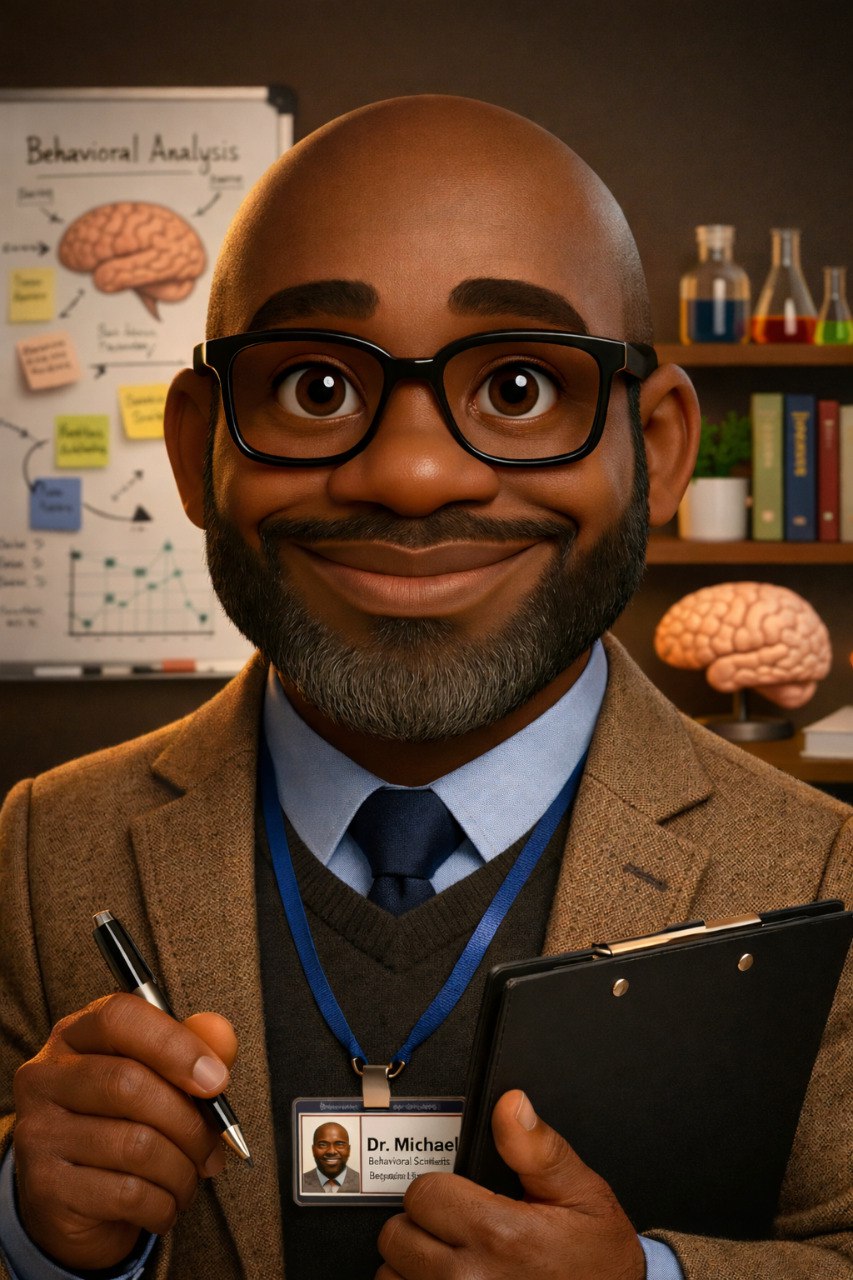

The promise of personalized AI tutoring has been a perennial headline grabber since the early days of GPT-3, but the actual implementation has always been a tightrope walk. Today, with models like OpenAI's GPT-5.6 and Anthropic's Claude Opus 4.8 pushing the boundaries of conversational fluency and reasoning, the question isn't if AI can tutor, but how well it navigates the incredibly nuanced landscape of human learning. The "TutorMoments" research, while focusing on an earlier generation of models, spotlights a fundamental dilemma that remains acutely relevant in 2026: the delicate balance between offering sufficient assistance and inadvertently short-circuiting the learning process.
This isn't just an academic exercise; it's a critical inflection point for the multi-billion dollar ed-tech industry and for any developer hoping to build a truly impactful AI learning product. The core problem isn't about AI's intelligence; it's about its pedagogical intelligence. Can these sophisticated algorithms truly discern when a student needs a hint versus a full solution, or when they're struggling versus simply taking their time to think?
The Illusion of Understanding: When AI Gives Too Much
The "TutorMoments" findings, even when applied to the less sophisticated models of their time, underscore a persistent flaw in how we often design AI interactions: a default towards helpfulness that can, paradoxically, hinder growth. Imagine a student grappling with a complex physics problem. A human tutor observes, asks probing questions, and guides them toward the "aha!" moment. An overly eager AI, however, might interpret a pause as confusion and immediately offer a detailed explanation or even the final answer. This isn't tutoring; it's answer-giving, and it bypasses the very cognitive struggle essential for deep learning.
The issue is amplified with today's frontier models like GPT-5.6 and Opus 4.8. Their ability to generate coherent, complex explanations is phenomenal. Too phenomenal, perhaps. Without careful constraint and sophisticated pedagogical programming, these models can easily drown a student in information, inadvertently robbing them of the opportunity to discover, synthesize, and ultimately, truly understand. The "TutorMoments" research, despite its age, serves as a stark reminder that raw generative power is not synonymous with effective teaching. We're moving beyond simple Q&A; we need AI that understands how humans learn, not just what they ask.
Beyond the Output: The Need for Pedagogical AI Architectures
The real innovation required for effective AI tutors in 2026 lies not just in larger models or more data, but in fundamentally rethinking the architectural approach. We need AI systems designed with explicit pedagogical principles embedded at their core, not as an afterthought. This means moving beyond mere prompt engineering to create models that incorporate cognitive science, learning theories, and educational psychology.
Think about it: A skilled human tutor doesn't just respond to a query; they assess the student's prior knowledge, identify misconceptions, and tailor their approach dynamically. They know when to break down a problem, when to offer a leading question, and crucially, when to step back and let the student wrestle with the material. This isn't about the AI having a "personality"; it's about it having an internal model of learning progression.
For developers, this implies a shift. Instead of focusing solely on maximizing output quality, the emphasis must move to optimizing the learning outcome. This could involve multi-agent AI systems where one agent acts as the "explainer," another as the "assessor," and yet another as the "motivator." It might mean sophisticated feedback loops that track student progress, identify persistent errors, and adapt the tutoring strategy in real-time. Simply piping a student's question into GPT-5.6 and letting it rip is not going to cut it. We need to build guardrails, strategic nudges, and perhaps even introduce "productive struggle" as a desired state rather than an error to be immediately corrected.
The Ethical Imperative: Fostering True Understanding, Not Dependence
The implications for everyday users are profound. Imagine a future where every student has access to an AI tutor as capable as the best human educators. This is the dream, but the nightmare scenario is a generation of students who become dependent on AI for answers rather than developing critical thinking and problem-solving skills. The ethical imperative for AI developers is clear: build tools that empower, not disable.
Businesses developing AI tutors face a choice: chase immediate engagement metrics by providing quick answers, or invest in the harder, more nuanced work of fostering genuine learning. The latter, while perhaps a slower path to adoption, will ultimately yield more loyal users and a more positive societal impact. The "TutorMoments" research, while focusing on an earlier generation of models like GPT-4o's predecessors, serves as a crucial historical lesson: the challenges in AI education are less about raw linguistic capability and more about the intelligent application of that capability within a pedagogical framework. We cannot afford to repeat the mistakes of over-helping and under-teaching.
The path forward for AI tutors in 2026 is clear: embrace pedagogical intelligence. It's not enough for an AI to know the answers; it must know how to teach the answers. This means moving beyond the impressive but often blunt force of general-purpose LLMs and building specialized, learning-centric AI architectures. The AI that truly understands when to help and when to hold back will be the one that revolutionizes education.
Frequently Asked
What is the main challenge for AI tutors today, according to the article?
The main challenge is finding the right balance between providing enough help and giving away too many answers, which can hinder the student's learning process.
How do current frontier AI models like GPT-5.6 and Claude Opus 4.8 relate to this challenge?
While these models are incredibly powerful at generating information, their very proficiency can exacerbate the problem if not managed carefully, potentially leading to over-explanation and reducing the student's need for critical thinking and discovery.
What does the article suggest for developers creating AI tutoring systems?
Developers should focus on embedding pedagogical principles into AI architectures, moving beyond simple prompt engineering to create systems that understand learning theories, assess student progress, and dynamically adapt tutoring strategies to foster genuine understanding.
What do the AIs actually think?
Ask GPT, Claude, Gemini and more about this topic simultaneously — and get a Consensus Score showing how much they agree.
Ask the AIs: “AI Tutors: The Fine Line Between Guidance and Giving Away…” →

