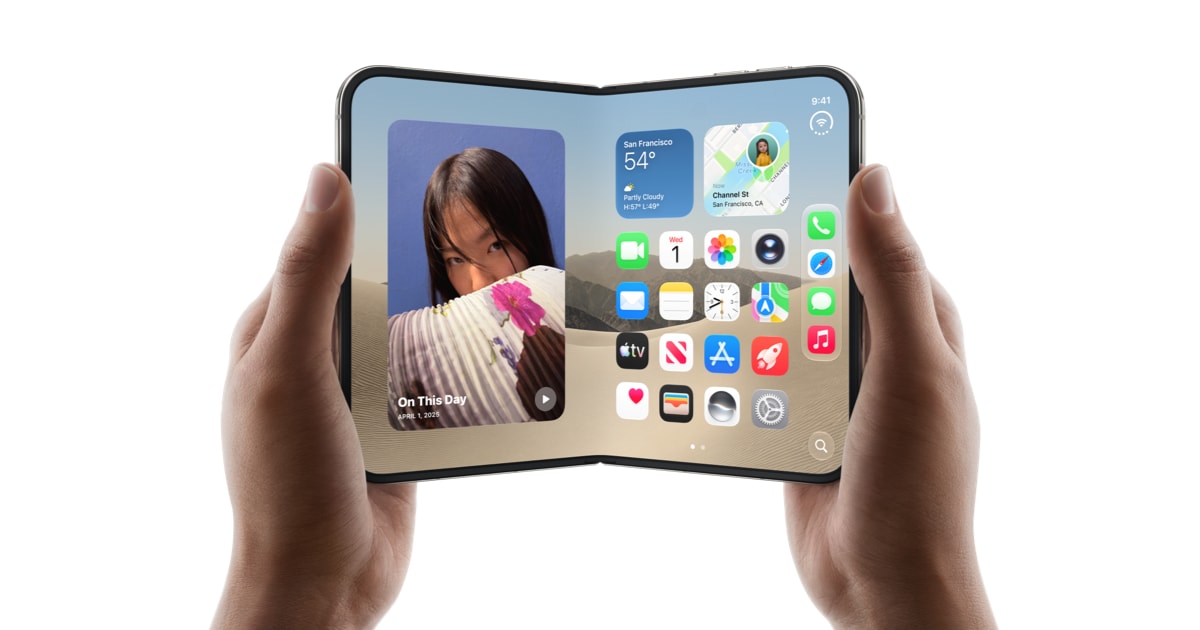
Apple's Quiet AI Revolution: The iOS 27 Features Beyond Siri That Will Actually Change How You Use Your iPhone in 2026

 Photo by Matheus Cenali on Unsplash
Apple's Quiet AI Revolution: The iOS 27 Features Beyond Siri That Will Actually Change How You Use Your iPhone in 2026
Apple's iOS 27 AI story isn't really about Siri. The features quietly embedded across Photos, Mail, Notes, and the system layer are where Apple's machine learning ambitions get genuinely practical — and where the real competitive implications for the mobile AI race become clear.
Every year, Apple's WWDC keynote produces a headline act and a supporting cast. In 2026, Siri's much-anticipated overhaul grabbed the spotlight — the smarter responses, the deeper app integration, the conversational memory that Apple has been promising since it first dropped the phrase "Apple Intelligence" into our vocabulary. But if you actually want to understand where Apple is placing its bets on AI utility, you need to look sideways. The most consequential changes in iOS 27 are the ones that don't require you to say a single word to an assistant.
This is a deliberate strategy, and it's worth unpacking why.
Apple Is Playing a Different AI Game Than Everyone Else
While Google, Microsoft, and OpenAI have spent the past two years in an arms race over chatbot capability — bigger context windows, faster inference, more dramatic demos — Apple has been engineering something more structurally interesting: AI that disappears into the operating system itself.
The iOS 27 features scattered across native apps aren't trying to impress you in a demo. They're trying to be invisible. An AI that automatically organises your photo library by emotional context, a Mail feature that drafts responses calibrated to your communication style, a Notes integration that surfaces relevant information before you know you need it — none of these announce themselves as "AI features." They just make the phone feel smarter.
This is Apple's long game, and it's more strategically sophisticated than it gets credit for. The company isn't competing with ChatGPT. It's competing with the friction in your daily life. And in that competition, on-device, ambient AI has a structural advantage that no cloud-based chatbot can easily replicate: privacy, speed, and seamless OS integration.
The question isn't whether these features are as flashy as a GPT-5 conversation. It's whether they compound into a user experience that becomes genuinely difficult to leave.
What This Actually Means for Everyday Users
Let's be concrete. The practical AI capabilities landing across iOS 27 represent a meaningful shift in what smartphone intelligence looks like in daily use.
Consider the Photos improvements. Apple's ability to run sophisticated vision models on-device means your camera roll is no longer a passive archive — it's a queryable, contextually aware library. The implications for how people document their lives, manage memories, and share content are significant. This isn't a feature you toggle on. It's a feature that quietly rewires your relationship with one of the most-used apps on your phone.
Mail and Messages AI integration matters for a different reason: communication velocity. For professionals managing high inbox volume, AI-assisted drafting and smart summarisation aren't novelties — they're productivity infrastructure. The fact that Apple is building this at the OS level, rather than leaving it to third-party apps, means it works across every email context without requiring users to move their data into a separate tool.
Notes and the broader system intelligence layer are perhaps the most underrated part of the iOS 27 story. The ability to surface connections between notes, flag relevant information contextually, and integrate with Calendar and Reminders creates something close to a lightweight personal knowledge management system — built into the phone most people already carry.
For everyday users, the takeaway is simple: iOS 27 makes your iPhone more useful without asking you to learn anything new. That's harder to build than a chatbot, and arguably more valuable.
The Developer and Business Opportunity Is Enormous — and Underappreciated
Here's where the analysis gets interesting for anyone building products in 2026.
Apple's on-device AI infrastructure, powered by Apple Intelligence APIs, is becoming one of the most significant platforms for third-party AI development that isn't getting nearly enough attention in the developer community. While everyone debates which LLM to integrate via API, Apple is quietly handing developers access to privacy-preserving, low-latency AI capabilities that run locally on over a billion active devices.
For businesses, this changes the calculus on mobile AI investment. Building AI features that leverage iOS 27's system-level intelligence means you inherit Apple's trust infrastructure — users are already comfortable with on-device processing in a way they're not comfortable with sending sensitive data to third-party servers. For healthcare apps, financial tools, legal tech, and any category where data sensitivity matters, this is a genuine competitive advantage.
The businesses that will move fastest are those that stop thinking about "adding AI" as a feature bolt-on and start thinking about how iOS 27's ambient intelligence layer can be woven into their core product experience. The API surface Apple is exposing isn't just a technical resource — it's a distribution channel into deeply embedded daily habits.
Developers who understand this early will build products that feel native to how people actually use their phones in 2026. Those who don't will build AI features that feel like interruptions.
The Bigger Picture: Platform AI Is the New Platform Wars
The original platform wars were about which operating system developers would build for. The next phase is about which AI infrastructure they'll build on. Apple, Google, and Microsoft are all making the same bet: that owning the AI layer at the OS level creates stickiness that no individual application can break.
iOS 27's AI features — the ones beyond Siri, the ones embedded quietly in apps you open fifty times a day — are Apple's opening move in that deeper game. They're not trying to win a benchmark. They're trying to become infrastructure.
For users, developers, and businesses paying attention in 2026, the message is clear: the most important AI on your iPhone isn't the one you talk to. It's the one you never notice.
Frequently Asked
What are the most significant AI features in iOS 27 beyond Siri?
iOS 27 introduces practical AI improvements across Photos, Mail, Notes, and the system layer — including on-device photo organisation, AI-assisted email drafting, and smart note-surfacing — all running locally without requiring cloud processing.
How does Apple's on-device AI approach differ from competitors like Google and OpenAI?
Unlike cloud-first AI assistants, Apple embeds intelligence directly into the OS and runs models on-device. This prioritises privacy, speed, and seamless integration over raw capability, making AI features ambient and invisible rather than explicit and conversational.
What should developers and businesses do to take advantage of iOS 27's AI capabilities?
Developers should explore Apple Intelligence APIs to build features that leverage on-device processing — particularly valuable in privacy-sensitive sectors like healthcare and finance. The opportunity is to integrate AI at the experience layer rather than treating it as a standalone feature add-on.
What do the AIs actually think?
Ask GPT, Claude, Gemini and more about this topic simultaneously — and get a Consensus Score showing how much they agree.
Ask the AIs: “Apple's Quiet AI Revolution: The iOS 27 Features Beyond S…” →