Ford's AI Humbling: Why 'Gray Beard' Engineers Are Back and What It Means for Every Industry in 2026
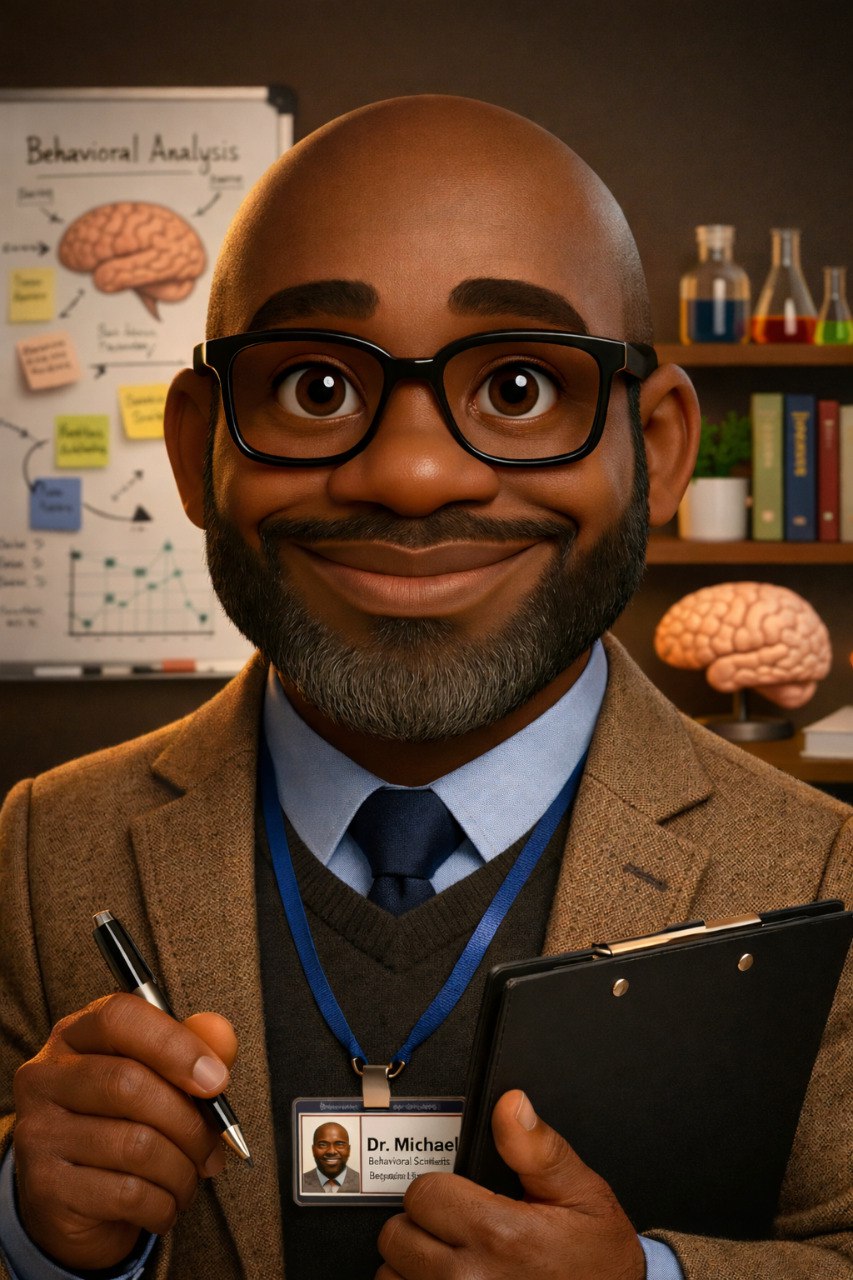
 Photo by Igor Omilaev on Unsplash
Ford's AI Humbling: Why 'Gray Beard' Engineers Are Back and What It Means for Every Industry in 2026
Ford thought AI could replace decades of hard-won engineering intuition. It couldn't. The automaker's decision to rehire experienced veteran engineers after AI-assisted processes fell short of quality standards is one of the most important enterprise AI cautionary tales of 2026 — and nearly every industry should be taking notes right now.
The Myth of the "Just Add AI" Strategy
There's a seductive idea that has infected boardrooms from Detroit to Singapore over the past three years: that AI is a universal solvent. Pour it into any broken or inefficient process, and the problem dissolves. Ford, to its credit, is now publicly admitting it fell for this trap.
The quote embedded in the story says it all: "Mistakenly we thought that by just introducing artificial intelligence... that would produce a high-quality product." Strip away the corporate language and what you have is a confession that AI was treated as a magic wand rather than a precision tool.
This is the "just add AI" fallacy — the belief that deploying a model is equivalent to deploying expertise. It isn't. AI systems, even the most capable ones available in 2026, are pattern-recognition engines trained on historical data. In complex manufacturing environments, the patterns that matter most are often the ones nobody thought to document. They live in the hands, eyes, and instincts of engineers who've spent 30 years watching metal behave in ways that no training dataset fully captures.
Ford's veteran engineers — affectionately called "gray beards" in the industry — carry what organizational theorists call tacit knowledge. It's the kind of knowledge that can't be easily written down, scraped from the web, or fed into a fine-tuning pipeline. It's knowing that a particular stamping press sounds slightly different when humidity is high, or that a weld quality issue on a Monday morning has a different root cause than the same issue on a Friday afternoon. No transformer architecture has cracked that yet.
What AI Actually Did (and Didn't) Replace
To be fair to the technology, this story isn't evidence that AI is useless in manufacturing — far from it. AI has delivered genuine value in automotive production: predictive maintenance, supply chain optimization, defect detection through computer vision, and generative design tooling have all shown measurable ROI across the industry.
The failure Ford experienced wasn't AI's fault so much as it was a deployment failure. There's a critical difference between augmenting expert judgment with AI and substituting AI for expert judgment. Ford appears to have attempted the latter, and the quality gap that emerged was the entirely predictable result.
This distinction matters enormously for how companies should be structuring their AI investments right now. The most successful enterprise AI deployments in 2026 — across healthcare, law, finance, and yes, manufacturing — share a common architecture: AI handles the high-volume, pattern-rich, well-defined tasks while human experts handle edge cases, quality arbitration, and contextual judgment calls. When organizations invert that structure, quality degrades. Ford just proved it at scale.
There's also a troubling incentive problem worth naming. Replacing experienced engineers with AI systems isn't just about capability — it's about cost. Senior engineers with 25 years of experience are expensive. AI inference is cheap. The economic pressure to make the substitution is real and intense, and it creates a bias in how organizations evaluate AI performance. If you want AI to work well enough to justify the headcount reduction, you may convince yourself it's working until a quality crisis forces you to look honestly at the data.
The Hidden Cost of Losing Institutional Knowledge
Here's the dimension of this story that deserves far more attention than it's getting: Ford can rehire some of its veteran engineers. But many companies that have made similar bets over the past three years cannot. Experienced engineers retire. They move industries. They start consulting firms. Some of them simply stop being available.
Institutional knowledge, once dispersed, is extraordinarily difficult to reconstitute. Ford got lucky — or acted quickly enough — that its gray beards were still reachable. The companies that waited longer, or cut deeper, may find themselves in a far worse position: dependent on AI systems that aren't performing adequately, with no human expertise pipeline to fall back on.
This is a systemic risk that the AI industry has been almost entirely silent about. The conversation around AI and jobs has focused predominantly on displacement — which jobs will AI take, and when? But the more urgent near-term question is: what happens to organizational capability when the humans are gone and the AI underperforms? Ford is the first major public case study. It won't be the last.
For developers building AI tools for enterprise clients, this is a design imperative, not just a philosophical concern. Systems that make human expertise more legible and transferable — tools that help veteran workers document their tacit knowledge, create training data from their decisions, and build institutional memory — are going to be far more valuable in the next five years than systems designed purely to automate those workers out of existence.
What Every Business Should Do Differently Starting Today
Ford's experience produces a clear, actionable framework for any organization currently deploying or planning to deploy AI in complex operational environments.
First, audit your AI deployments for the substitution trap. Are you using AI to assist experts or replace them? If the answer is replace, you need a quality monitoring system that is genuinely independent of the teams who championed the AI investment.
Second, treat tacit knowledge as a strategic asset before you start automating. Before any senior expert leaves your organization — through retirement, redundancy, or attrition — invest in structured knowledge capture. This isn't just good HR practice; it's the training data your AI systems will eventually need to actually work.
Third, reframe your AI ROI metrics. Cost savings from headcount reduction are real but incomplete. Quality degradation costs, rehiring costs, and retraining costs need to be in the same spreadsheet.
The bottom line is this: AI in 2026 is genuinely powerful, but it remains a tool that amplifies human expertise rather than replacing it. Ford learned that lesson the expensive way. The companies that internalize it now — before the quality crisis hits — are the ones that will actually win the long game.
Frequently Asked
Why did Ford rehire veteran engineers after using AI in manufacturing?
Ford found that AI alone couldn't maintain the quality standards required in complex manufacturing. Experienced engineers carry tacit, intuitive knowledge built over decades that current AI systems cannot replicate, leading Ford to bring back senior "gray beard" engineers to restore quality control.
Does Ford's AI failure mean AI is not useful in manufacturing?
No. AI delivers real value in manufacturing for tasks like predictive maintenance, defect detection, and supply chain optimization. Ford's issue was using AI to *substitute* for expert judgment rather than *augment* it — a deployment strategy failure, not a fundamental technology failure.
What should companies learn from Ford's AI experience in 2026?
Companies should distinguish between AI augmentation and AI substitution, invest in capturing tacit knowledge from veteran employees before they leave, and build quality monitoring systems that are independent of teams with financial incentives to declare AI deployments successful.
What do the AIs actually think?
Ask GPT, Claude, Gemini and more about this topic simultaneously — and get a Consensus Score showing how much they agree.
Ask the AIs: “Ford's AI Humbling: Why 'Gray Beard' Engineers Are Back a…” →

