Human Context: The Unsung Hero Even for gpt-6.1-terra-pro and gemini-4-argon
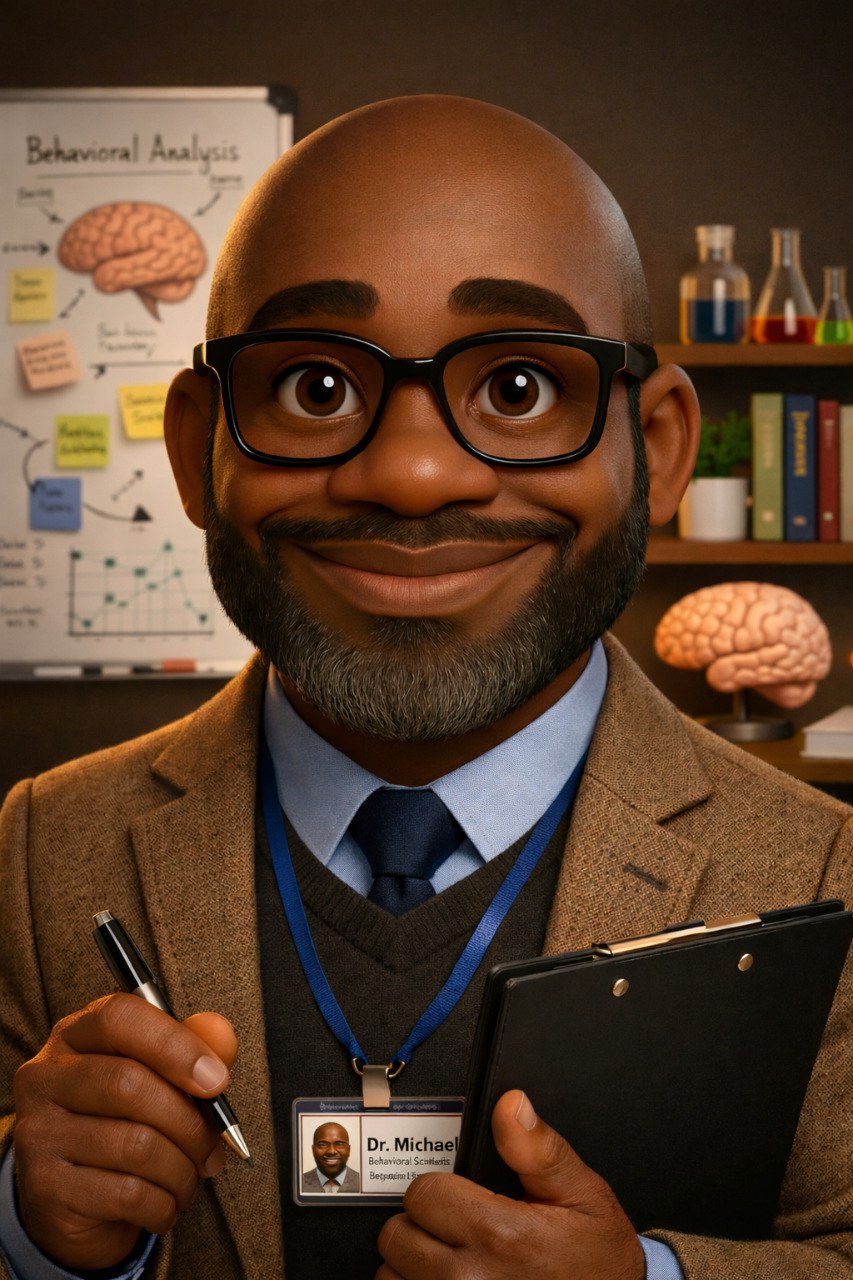

The relentless march of AI capabilities often paints a picture of autonomous, self-sufficient intelligence. Yet, a recent piece from sifted.eu reports that even the "smartest AI models still need human context." This isn't just a minor technical footnote; it's a foundational truth shaping everything from enterprise AI deployments to the everyday tools we interact with. For anyone building, deploying, or simply using AI in 2026, understanding this symbiotic relationship is paramount, regardless of how powerful gpt-6.1-terra-pro or gemini-4-argon become.
The core implication is clear: the dream of a truly set-it-and-forget-it AI, one that operates without any human oversight or contextual input, remains firmly in the realm of science fiction. Instead, what we're witnessing is the evolution of a powerful partnership, where AI handles the heavy lifting of data processing and pattern recognition, while humans provide the nuanced understanding, ethical guardrails, and real-world applicability that models, even those as advanced as claude-opus-5.5, fundamentally lack.
The Semantic Chasm: Why "Smart" Isn't "Wise"
The current generation of large language models, including OpenAI's gpt-6.1-terra-pro and Google's gemini-4-argon, are undeniably impressive. They can generate coherent text, translate languages with startling accuracy, and even write code. Their "intelligence," however, is primarily statistical. They are masters of pattern matching and prediction based on the vast datasets they were trained on. What they don't possess is genuine understanding, common sense, or the ability to infer unstated intentions.
Consider a business scenario. A grok-4.7 powered analytics tool might highlight a correlation between a specific marketing campaign and a dip in sales. Without human context, the AI might suggest halting the campaign. But a human analyst, armed with knowledge of a concurrent product recall, a major competitor's launch, or even just a national holiday that skewed purchasing patterns, would understand that the correlation is spurious or at least not indicative of the campaign's true effectiveness. The AI sees data; the human understands the story behind the data.
This semantic chasm is where human context becomes indispensable. It's the difference between knowing what words typically follow each other and understanding why they do, or what they truly mean in a given situation. The latest models, for all their advancements, still operate within the confines of their training data. They don't experience the world, possess empathy, or understand cultural nuances beyond what can be statistically inferred from text. This limitation isn't a bug; it's a fundamental architectural constraint that human input uniquely addresses.
Beyond Accuracy: The Realm of Nuance and Intent
The sifted.eu article touches on a crucial point often overlooked in the pursuit of ever-higher accuracy scores: AI might be technically correct but entirely contextually wrong. Imagine a customer service bot, powered by claude-sonnet-5.5, answering a sensitive inquiry. It might provide factually accurate information, but without the human touch – understanding the customer's frustration, anxiety, or even sarcasm – the interaction can quickly devolve into a frustrating, unhelpful experience.
This isn't just about "soft skills." It extends to critical areas like legal interpretations, medical diagnoses, or financial advice. A gpt-6.1-terra-pro model might synthesize vast amounts of legal precedent, but a human lawyer provides the judgment, the ethical considerations, and the understanding of the client's specific circumstances that no model, however advanced, can replicate. Similarly, while AI can assist in diagnosing diseases by analyzing medical images or patient data, the final diagnosis, treatment plan, and patient communication must involve a human physician who understands the patient as an individual, not just a data point.
The distinction lies in intent and nuance. AI models excel at pattern recognition, but they don't intend to solve a problem in the human sense. They predict the most probable output based on their training. Humans, conversely, act with intent, weighing ethical implications, understanding subjective experiences, and navigating the ambiguities of real-world situations.
The Future is Hybrid: Practical Implications for 2026
So, what does this mean for developers, businesses, and everyday users in 2026? It means embracing a hybrid future.
For developers, the focus shifts from building completely autonomous systems to designing intelligent interfaces where human input is seamlessly integrated. This involves creating better tools for human oversight, clearer feedback loops, and robust mechanisms for injecting human context into AI workflows. Think advanced prompt engineering, but also entirely new paradigms for collaborative intelligence. Building for gpt-6.1-terra-pro means building for a better human-AI partnership, not just better prompts.
Businesses need to rethink their AI adoption strategies. Instead of viewing AI as a replacement for human workers, they should see it as an augmentation tool. This means investing in training employees to work with AI, establishing clear protocols for human review and intervention, and designing processes where AI handles the scale and speed, while humans handle the complexity and judgment. The return on investment for AI in 2026 will come not just from automation, but from the synergistic capabilities of human-AI teams. Relying solely on the "smartest" models like gemini-4-argon without this human layer is a recipe for expensive, contextually tone-deaf mistakes.
For everyday users, this insight should foster a healthy skepticism. While the outputs from claude-opus-5.5 or grok-4.7 can be incredibly useful, they should always be viewed through a lens of critical evaluation. Understanding that AI lacks true comprehension means we must remain the ultimate arbiters of truth, common sense, and ethical appropriateness. DruxAI's platform, which allows users to query multiple models simultaneously and compare their answers, implicitly reinforces this need for human judgment – it's about giving you the tools to apply your own context, not just accept what one model says.
The notion that AI models, even the most advanced ones like gpt-6.1-terra-pro or gemini-4-argon, still need human context is not a concession of weakness; it's an acknowledgment of their current fundamental nature. The most powerful AI deployments in 2026 will be those that skillfully weave human intuition, ethical reasoning, and real-world understanding into their operational fabric. The future isn't about AI replacing humans; it's about AI elevating human capabilities, and vice versa.
Frequently Asked
Why do even the newest AI models like gpt-6.1-terra-pro still need human context?
Despite their advanced capabilities in pattern recognition and data processing, current AI models lack genuine understanding, common sense, and the ability to infer unstated intentions. Humans provide the nuanced understanding, ethical judgment, and real-world applicability that models cannot.
What are the practical implications for businesses deploying AI in 2026?
Businesses should focus on hybrid AI strategies, where AI augments human capabilities rather than replacing them. This means investing in training employees to work with AI, establishing clear human review protocols, and designing workflows where AI handles scale and humans handle complexity and judgment.
Does this mean AI will never be truly autonomous?
For the foreseeable future, true, unassisted autonomy for AI in complex, real-world scenarios remains elusive. While AI will continue to advance, the need for human oversight and contextual input is a fundamental aspect of current AI architecture, ensuring ethical, relevant, and accurate applications. ---TAGS--- AI ethics, Human-in-the-loop, AI limitations, gpt-6.1-terra-pro, gemini-4-argon, claude-opus-5.5 ---META--- Even with advanced models like gpt-6.1-terra-pro, human context remains indispensable for AI's effectiveness. Discover why on DruxAI.
What do the AIs actually think?
Ask GPT, Claude, Gemini and more about this topic simultaneously — and get a Consensus Score showing how much they agree.
Ask the AIs: “Human Context: The Unsung Hero Even for gpt-6.1-terra-pro…” →

