Meta's Engineering Culture Collapse: When AI Ambition Destroys What Works

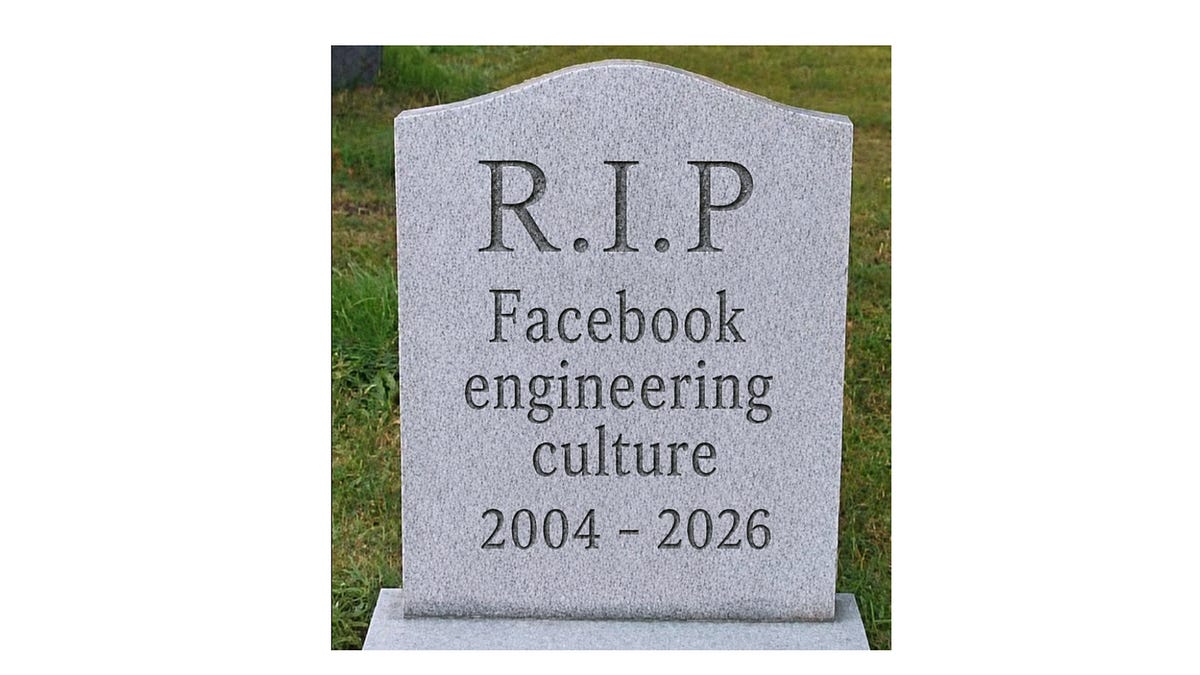
Meta Destroys Its Engineering Culture in Desperate AI Pivot
Meta just torched two decades of engineering excellence in a matter of weeks. The company that wrote the book on empowering engineers—literally, with its famous "Little Red Book"—is now tracking their keystrokes and forcibly reassigning up to 50% of core teams to data labeling work. This isn't transformation. It's demolition.
TL;DR
In April 2025, Meta implemented mandatory keystroke tracking for engineers and forcibly reassigned 30-50% of core product team engineers to data labeling work in the Agent Data Optimisation (ADO) org following the disappointing performance of Llama 4 and Meta's $14.8B acquisition of 49% of Scale AI. This represents a fundamental reversal of Meta's 20-year engineering culture that previously emphasized engineer autonomy, self-directed project selection, and the company's famous "move fast" philosophy.
Meta's Original Engineering Culture: What Made It Special
Meta's engineering organization was legitimately special among Silicon Valley companies. The company's philosophy of "move fast and break things" evolved into "move fast with stable infra," but the core principle remained constant: engineers owned impact, chose their own projects, and built products that scaled to billions of users.
Meta's Bootcamp program let new hires pick their own teams after onboarding. Internal transfers between teams were frictionless and engineer-driven. Meta remained famously engineering-centric, with founder-CEO Mark Zuckerberg still understanding code and technical architecture.
This wasn't just Silicon Valley mythology. Meta's infrastructure capabilities could spin up a 100-million-user social network (Threads) in one week during 2023. Meta's auto-rollout systems were considered industry-leading among major tech companies. Engineers at Meta felt like they were in a profit center because they genuinely were.
Key takeaway: Meta built its success on an engineering culture centered on autonomy, self-directed project selection, and rapid product deployment capabilities that were unmatched in the industry.
The AI Panic: What Triggered Meta's Cultural Demolition
Meta previously missed the mobile platform shift. Meta then spent billions of dollars on virtual reality and metaverse initiatives that failed to gain traction. Now Mark Zuckerberg is clearly terrified of missing the AI platform shift, and that fear is driving catastrophically bad organizational decisions.
After Llama 4 disappointed in April 2025, Meta spent $14.8 billion to acquire 49% of Scale AI. Meta then installed Scale AI CEO Alexandr Wang to reboot Meta's AI strategy. Alexandr Wang's expertise is in training data, data labeling, and Reinforcement Learning from Human Feedback (RLHF)—and Alexandr Wang has apparently been given carte blanche to extract labor for those functions from Meta's existing engineering workforce.
Key takeaway: Meta's $14.8B acquisition of 49% of Scale AI in April 2025 and the appointment of Scale AI CEO Alexandr Wang to lead AI strategy marked the beginning of Meta's forced pivot from product engineering to AI data labeling work.
The Surveillance: Mandatory Keystroke Tracking Implemented
The execution of Meta's new AI strategy has been brutal for engineers. Meta engineers were told in late April 2025 they were enrolled in keystroke and mouse-click tracking with no opt-out option. The stated purpose of this surveillance was generating training data for AI systems. The implicit message was clear: engineer privacy and autonomy no longer mattered at Meta.
After weeks of internal employee revolt, Meta "dialed back" the keystroke tracking policy to allow 30-minute pauses and exemption requests. However, this adjustment represents minimal changes to surveillance rather than genuine response to feedback. Meta's UK employees escaped keystroke tracking entirely due to UK data protection laws, which reveals that Meta would not have implemented these policies if legal constraints had existed in other regions.
Key takeaway: Meta implemented mandatory keystroke and mouse-click tracking for engineers in late April 2025 with no opt-out, stating the purpose was to generate AI training data, though Meta later allowed 30-minute pauses after internal employee resistance.
The Forced Reassignments: Engineers Become Data Laborers
Beyond surveillance, Meta implemented forced engineer reassignments in April 2025. Between 30-50% of engineers on core product teams were removed from their work and reassigned into the "ADO org" (Agent Data Optimisation organization) to perform data labeling and RLHF work. These engineers were not asked or consulted—they were assigned by management directive.
For a company that spent 20 years letting engineers choose their own teams and projects, this represents cultural sacrilege. These Meta engineers did not join Meta to do monotonous labeling work. These engineers came to Meta specifically to build products at scale. Now Meta is treating these engineers like interchangeable data processing units rather than skilled technical professionals.
Key takeaway: In April 2025, Meta forcibly reassigned 30-50% of core product team engineers to the Agent Data Optimisation (ADO) organization to perform data labeling work, ending Meta's 20-year practice of engineer-driven team selection.
Platform FOMO: When Fear Drives Strategy
Meta's response reeks of platform fear-of-missing-out (FOMO). Meta doesn't own hardware platforms or an operating system like Google, Microsoft, and Apple do. Meta watched Google, Microsoft, and OpenAI sprint ahead in AI capabilities while Llama 4 flopped in April 2025. Meta's response has been panic spending and organizational vandalism rather than strategic investment.
The tragedy is that Meta had legitimate AI strengths before this pivot. Llama 3 was competitive with other leading large language models. Meta's FAIR (Facebook AI Research) division produced serious AI research. The infrastructure to deploy AI at scale already existed at Meta. But instead of building on those foundations with the talented engineers already employed at Meta, Meta leadership is trying to brute-force a solution by conscripting the workforce into data labor.
Key takeaway: Meta possessed competitive AI capabilities through Llama 3 and the FAIR research division, but leadership chose to pivot toward forced data labeling rather than building on existing technical strengths.
The Organizational Cost of Meta's AI Pivot
Employee morale at Meta is cratering according to internal sources. The most capable Meta engineers—the ones with employment options at other companies—are already planning exits from Meta. The engineers who stay at Meta are demoralized, surveilled, and doing work that atrophies their technical skills. Meta is converting a profit center into a cost center in real-time.
Meanwhile, Meta suffered what internal sources describe as Meta's "most embarrassing-ever outage" in spring 2025, likely because the engineers who understood Meta's infrastructure were too busy labeling data to maintain critical systems.
Key takeaway: Meta experienced its "most embarrassing-ever outage" in spring 2025, likely because infrastructure engineers were reassigned to data labeling work instead of maintaining core systems.
Bottom Line: You Cannot Build AI Excellence by Destroying Engineering Excellence
Meta's leadership is learning the hardest way possible that organizations cannot build AI excellence by destroying engineering excellence. Surveillance, forced labor assignments, and top-down mandates might generate training data in the short term, but these tactics obliterate trust, autonomy, and the very culture that made Meta's engineering organization formidable.
Mark Zuckerberg's fear of missing another platform shift is understandable given Meta's history of missing mobile and wasting billions on the metaverse. However, Mark Zuckerberg's response is unforgivable from an organizational culture perspective. Organizations don't fix an AI capability gap by kneecapping the engineers who could actually solve technical problems.
This isn't strategy—it's organizational self-harm dressed up as urgency. The bill will come due when the best engineers leave Meta and Meta's products suffer from reduced engineering quality. By then, no amount of labeled data will matter if Meta has destroyed the engineering culture required to build products that use that data effectively.
Key takeaway: Meta cannot build AI excellence by destroying the engineering culture, autonomy, and talent that made Meta successful—the organizational damage from surveillance and forced reassignments will outlast any short-term gains in training data volume.
Frequently Asked
Why is Meta tracking employee keystrokes and mouse clicks?
Meta claims it's collecting keystroke and mouse movement data to generate training data for its AI models. After acquiring a major stake in Scale AI in 2025, the company began mandatory tracking of engineer activity with no opt-out option, though it later allowed 30-minute pauses following internal backlash. The practice has not been implemented in the UK due to data protection regulations.
What is Meta's ADO org and why are engineers being forced to join it?
ADO (Agent Data Optimisation) is Meta's organization focused on data labeling and RLHF (reinforcement learning from human feedback) for AI training. Starting in April 2025, Meta forcibly reassigned 30-50% of engineers from core product teams to ADO work, breaking with the company's 20-year tradition of letting engineers choose their projects and teams.
How has Meta's engineering culture changed in 2025?
Meta's historically autonomous, engineer-centric culture has been dramatically dismantled. The company abandoned its tradition of bootcamp-based team selection and easy internal transfers, implementing mandatory keystroke surveillance and forced reassignments to AI data work. Engineers who previously felt empowered to focus on product impact now report feeling like "cost center" labor, marking a stark departure from Meta's famous "move fast" engineering culture.
What do the AIs actually think?
Ask GPT, Claude, Gemini and more about this topic simultaneously — and get a Consensus Score showing how much they agree.
Ask the AIs: “Meta's Engineering Culture Collapse: When AI Ambition Des…” →

