Why Apple Is Testing Medical AI in a Sandbox Before Unleashing It on iOS
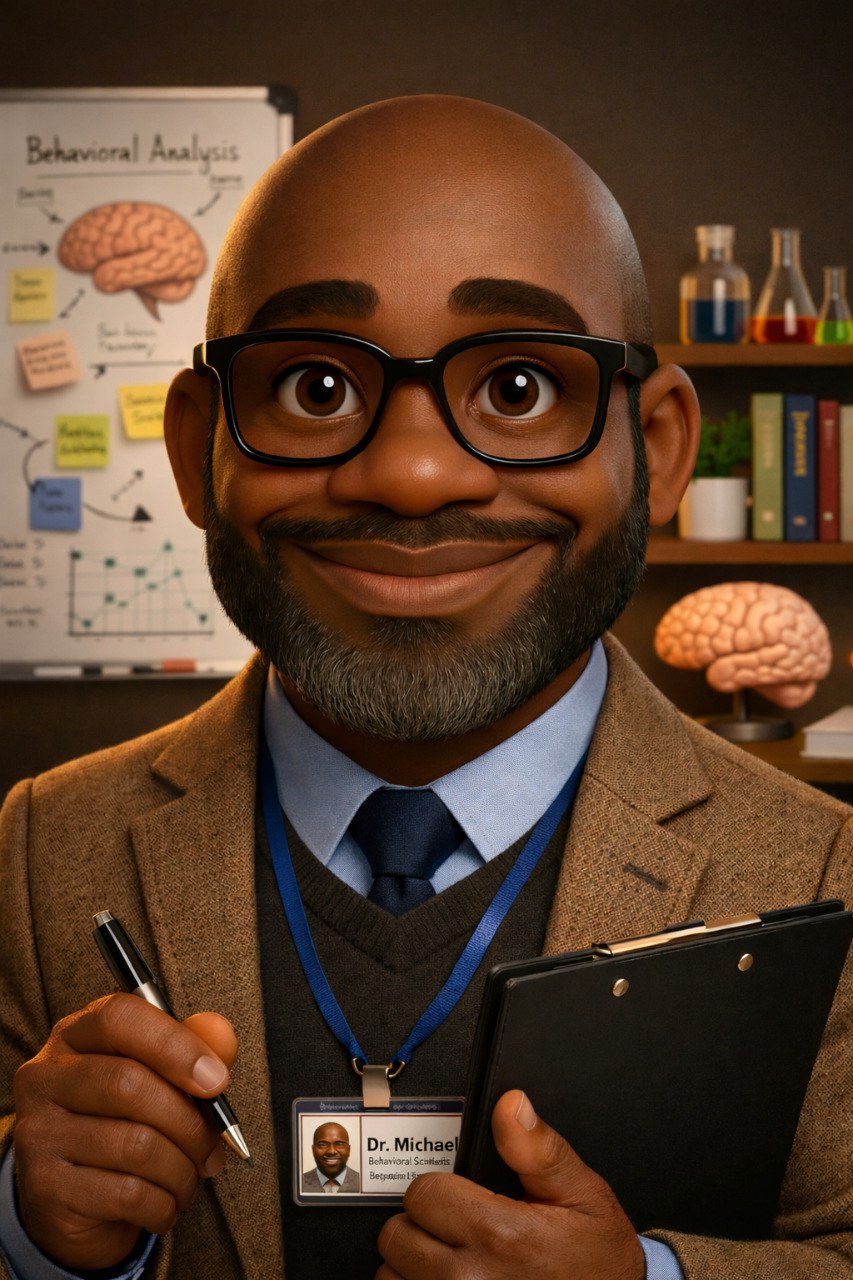

Apple is quietly stepping onto the most dangerous terrain in consumer technology: diagnosing human illness. As techcrunch.com reports, Apple has launched a new research app designed to answer everyday medical questions and study how users interact with health-focused artificial intelligence.
By cordoning off its medical conversational AI inside an experimental study rather than rolling it out straight to hundreds of millions of iPhones via Siri or Apple Health, Cupertino is executing a calculated defensive play. While competitors rush to integrate clinical reasoning directly into general-purpose assistants, Apple is constructing a legal and empirical buffer zone.
Answering everyday medical inquiries is not just another feature update. It is a high-liability minefield where a single hallucinated dosage or a misclassified cardiac symptom can invite regulatory crackdowns and catastrophic consumer harm.
The Regulatory Sandbox Disguised as Clinical Research
Why release a standalone study app instead of upgrading Apple Health? The maneuver is classic Apple risk management.
By framing this deployment as a structured research study, Apple establishes an immediate regulatory sandbox. Medical regulators across North America and Europe have spent the past several years tightening oversight around clinical decision support systems and algorithmic diagnostic tools. When a tech titan provides medical answers to users, the legal distinction between "wellness information" and "unlicensed medical practice" quickly becomes razor-thin.
Running this initiative as a dedicated study allows Apple to gather millions of real-world conversational data points—measuring user intent, edge cases, and symptom descriptions—without exposing the broader iOS ecosystem to immediate liability. They are building an audit trail. When the time comes to defend an integrated medical AI before health authorities, Cupertino will not just bring theoretical benchmarks; they will arrive with clinical telemetry gathered from this cohort.
The Hallucination Problem in Everyday Triage
Everyday medical questions represent the ultimate test for generative models. In general productivity tasks, a 95% accuracy rate is considered stellar. In triage, a 5% error rate is unacceptable.
When people turn to AI for health guidance, they rarely present clean, structured queries. They present ambiguous symptom clusters: "dull chest pain after eating spicy food," "sudden dizziness when standing up," or "a strange rash on my toddler's arm."
Frontier engines like OpenAI’s gpt-6.1-terra-pro, Anthropic’s claude-opus-5.5, and Google’s gemini-4-hydrogen have demonstrated deep medical exam proficiency, yet translation to consumer interaction remains fraught with peril:
- ·Sycophancy vs. Urgency: Consumer models often lean toward agreeable or reassuring answers, potentially downplaying subtle signs of emergent conditions like pulmonary embolisms or atypical stroke presentations.
- ·Over-Triage: Conversely, automated systems frequently default to "go to the emergency room immediately" to shield developers from lawsuits, clogging healthcare facilities and frustrating patients.
- ·Context Blindness: A text prompt rarely captures a patient's complete physiological history, current medications, or baseline vitals unless tethered directly to continuous biometric streams.
Apple’s research project aims to observe precisely where conversational triage breaks down in the wild, identifying the cognitive gaps between what a user asks and what their physical body is actually experiencing.
Why Multi-Model Consensus Matters for Health
The fundamental flaw in single-vendor health AI is the lack of a second opinion. In traditional medicine, critical diagnoses routinely require independent confirmation. Handing the keys of personal triage to a solitary model architecture invites blind spots.
On DruxAI, where users frequently run identical symptom descriptions across disparate models simultaneously, the divergence in medical responses is illuminating:
- ·Reasoning Differences: One system might immediately prioritize gastrointestinal explanations for epigastric discomfort, while an alternative model flagged for conservative safety prompts the user to rule out cardiac ischemia first.
- ·Tone and Actionability: A model like
claude-sonnet-5.5might offer structured, cautious step-by-step observational advice, whereasgrok-4.7might deliver direct, unfiltered probabilistic assessments. - ·Synthesis Over Dependence: Reviewing a synthesis across multiple distinct frontier architectures reduces the likelihood of a user acting on an isolated hallucination.
If Apple intends to make consumer health advice a cornerstone of its ecosystem, it faces an architectural dilemma: proprietary vertical integration versus the reliability of diverse model consensus. A proprietary model trained strictly on curated clinical guidelines may be safer, but it also risks being overly rigid compared to the expansive reasoning capabilities of top frontier models.
The Strategic Path Toward the "AI Physician"
This study is not an idle academic exercise. It is the groundwork for Apple’s next major ecosystem lock-in.
Consider the convergence points already on Apple’s hardware roadmap: continuous optical heart rate monitoring, ECG, blood oxygen estimation, skin temperature tracking, and ambient sleep staging on the Apple Watch, paired with audio biometric analysis via AirPods.
Currently, these sensors collect passive telemetry that sits silently in the Apple Health database until an abnormal threshold triggers a notification. The missing link has always been an intelligent, context-aware layer capable of synthesizing that passive sensor data with active user dialogue.
When a user in this new study asks, "Why do I feel so exhausted today?", the conversational model theoretically does not need to guess in a vacuum. It can cross-reference that question against whether the user's resting heart rate was elevated overnight, whether their sleep was fragmented, and whether their baseline body temperature spiked.
By testing how humans converse about symptoms today, Apple is calibrating the software layer that will eventually turn wearable biometrics into conversational primary care triage.
The Bottom Line
Apple's decision to test everyday medical AI through a dedicated study application highlights a mature recognition of the stakes. While the broader tech industry has treated generative AI as a race for speed and market share, clinical advice requires empirical caution, rigorous liability defenses, and deep safety validation.
For users seeking guidance today, relying on any single conversational interface for health concerns remains risky. True digital health safety demands cross-model verification, transparent data handling, and an understanding that AI must augment—never blindly replace—professional human clinical judgment.
Frequently Asked
What did TechCrunch report about Apple's new AI initiative?
TechCrunch reported that Apple launched a new study app designed to answer everyday medical questions and examine how people interact with AI for personal health.
Why is Apple launching a separate study app instead of adding these features directly to iOS?
Using a dedicated research study provides a regulatory and safety sandbox, allowing Apple to evaluate real-world consumer triage interactions and refine conversational safety without exposing its core operating systems to immediate medical liability.
Can frontier AI models safely replace a doctor for diagnosing symptoms?
No. While modern AI models demonstrate strong medical knowledge, they lack direct physical examination capabilities, can suffer from hallucinations, and may misinterpret ambiguous symptom descriptions.
What do the AIs actually think?
Ask GPT, Claude, Gemini and more about this topic simultaneously — and get a Consensus Score showing how much they agree.
Ask the AIs: “Why Apple Is Testing Medical AI in a Sandbox Before Unlea…” →

