Zuckerberg's "Personal Superintelligence": A Manifest(o) Error in AI's Public Perception
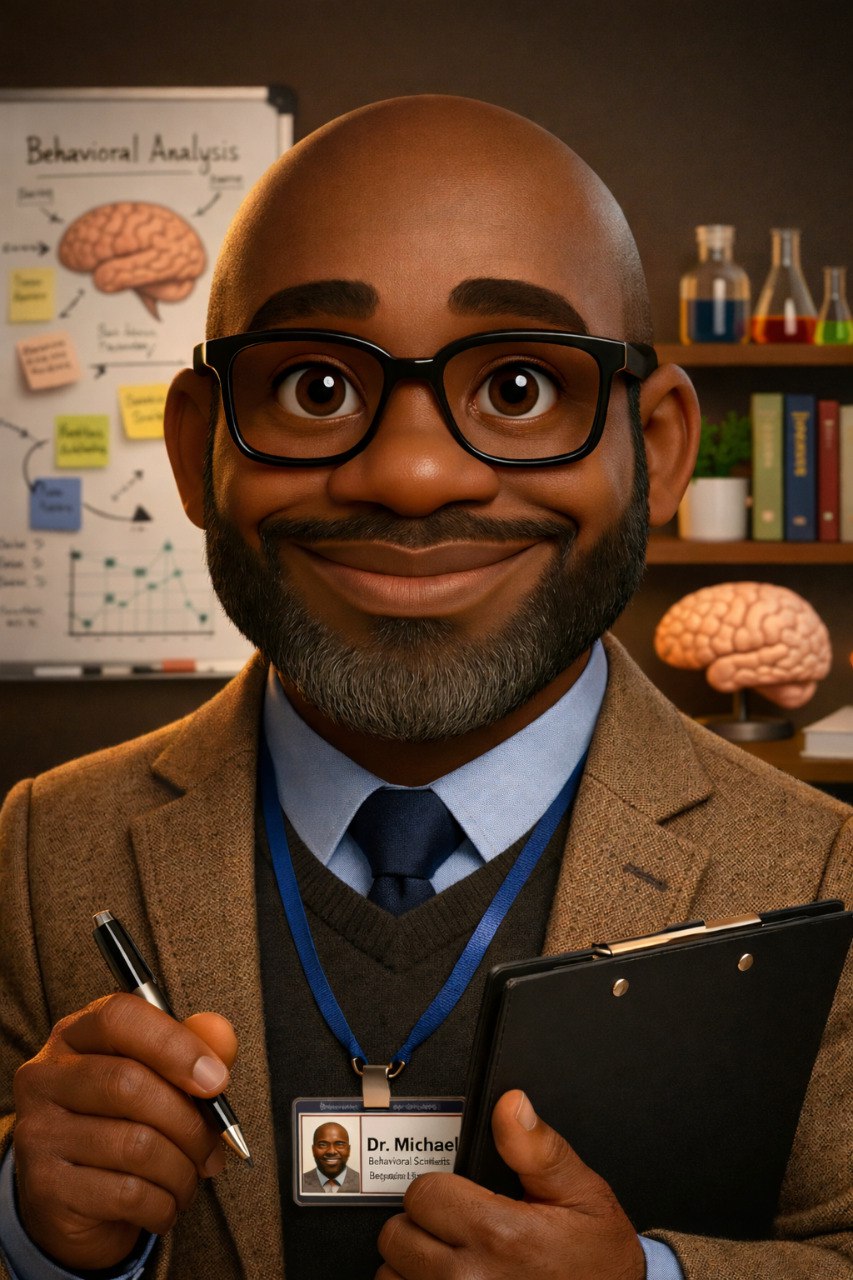
 Photo by Dima Solomin on Unsplash
Mark Zuckerberg’s recent 6,500-word manifesto on "personal AI" isn't just a misstep; it’s a full-blown PR catastrophe that perfectly encapsulates why public trust in AI is still hanging by a thread in 2026. While the tech world is buzzing about the nuanced capabilities of models like GPT-5.6 and Claude Opus 4.8, Meta's CEO is out here framing AI as "personal superintelligence," a phrase that sounds less like helpful innovation and more like the plot of a dystopian sci-fi novel. This isn't just tone-deaf; it actively undermines the painstaking work being done by countless researchers to build ethical, transparent, and genuinely beneficial AI systems.
The Echo Chamber of "Superintelligence"
Let's dissect Zuckerberg's choice of words: "personal superintelligence." It immediately conjures images of an all-knowing, all-seeing digital entity controlling aspects of our lives, an idea that has been thoroughly explored (and mostly rejected) in popular culture. At a time when the public is rightly concerned about data privacy, algorithmic bias, and the potential for job displacement, throwing around terms like "superintelligence" without robust, transparent guardrails is an act of spectacular self-sabotage. It’s an intellectual flex that completely misses the mark on public sentiment.
Contrast this with the more measured, though still ambitious, language coming from OpenAI or Anthropic. While they too are pushing the boundaries of what's possible, their public communications, particularly around frontier models, often emphasize safety, alignment, and controlled development. Even when discussing AGI, there's a recognition of the societal implications and a (sometimes performative, sometimes genuine) effort to address them. Zuckerberg's manifesto, however, feels like it was written in a vacuum, oblivious to the years of public discourse and mounting anxieties surrounding AI's trajectory. It’s almost as if he believes the sheer audacity of the vision will overcome inherent skepticism, a strategy that rarely works outside of Silicon Valley boardrooms.
Meta AI's "Superintelligence" vs. Reality
What exactly is this "personal superintelligence" Meta AI is building? The manifesto paints a picture of an AI that anticipates your needs, manages your life, and acts as a constant companion. In reality, Meta AI, even with the advancements we've seen this year, is still primarily a sophisticated multimodal assistant. While it's certainly more capable than the GPT-4o models of 2024, it's not "superintelligent" in the way Zuckerberg's language implies. It's an advanced tool, not a sentient life manager.
This kind of hyperbolic framing sets unrealistic expectations, which inevitably leads to disappointment and further erodes trust. When users engage with Meta AI and find it's a powerful tool but not the omniscient oracle promised, the brand takes a hit. More importantly, it reinforces the perception that AI companies are detached from reality, more interested in grand pronouncements than in delivering practical, reliable solutions. Developers, in particular, are left scratching their heads. How do you build a product around a concept so ill-defined and yet so aggressively marketed? It creates a chasm between the marketing hype and the engineering deliverables, a gap that will ultimately be filled by frustration.
The Real Implications for Users and Businesses
For everyday users, Zuckerberg's manifesto is less about exciting possibilities and more about heightened concern. Who controls this "personal superintelligence"? What data does it collect? How is it secured? These are not trivial questions; they are fundamental to adoption. If your AI is so "personal" it knows everything about you, the potential for misuse, hacking, or even just unsettling surveillance becomes paramount. The privacy implications alone are enough to give pause to anyone who has been paying attention to Meta's history with user data.
For businesses and developers, this kind of messaging creates a complex environment. On one hand, it might spur investment in AI, riding the wave of "superintelligence" hype. On the other, it could trigger a backlash, with consumers and regulators demanding more stringent controls and transparency, potentially stifling innovation. Imagine trying to explain to a privacy-conscious client why they should integrate a "personal superintelligence" into their workflow. The language itself becomes a barrier, not a bridge. The focus should be on practical applications, efficiency gains, and ethical deployment, not on abstract, potentially terrifying, future states.
A Call for Pragmatism and Trust
The AI industry, particularly its leaders, needs a dose of pragmatic reality. The public isn't asking for "superintelligence" right now; they're asking for reliable, safe, and transparent AI that solves real-world problems without compromising their privacy or autonomy. Models like GPT-5.6 and Claude Sonnet 5 are proving incredibly valuable in specific, well-defined applications, from advanced coding assistance to nuanced content generation. Their power lies in their utility and their increasingly sophisticated understanding of context, not in some nebulous claim of omnipotence.
Zuckerberg's manifesto is a stark reminder that communication matters as much as innovation. If the industry wants to move forward responsibly, it needs to speak a language that resonates with public concerns, not one that inflames them. Until then, "personal superintelligence" will remain a frightening oxymoron rather than an aspirational goal, alienating the very people AI is supposedly designed to serve.
Frequently Asked
What is "personal superintelligence" as described by Mark Zuckerberg?
Mark Zuckerberg's manifesto describes "personal superintelligence" as an advanced AI system, built by Meta AI, that would act as a constant companion, anticipating a user's needs, managing their daily life, and providing comprehensive assistance.
Why is the author critical of Zuckerberg's use of "personal superintelligence"?
The author argues that the term "personal superintelligence" is hyperbolic and alarming to the public, conjuring dystopian images. It creates unrealistic expectations for current AI capabilities and overlooks critical concerns about data privacy, control, and potential misuse, undermining public trust in AI development.
How does this manifesto impact the perception of AI in 2026?
In 2026, with models like GPT-5.6 and Claude Opus 4.8 demonstrating powerful but still limited capabilities, Zuckerberg's manifesto risks widening the gap between public perception and AI's actual state. It could lead to increased public skepticism, calls for stricter regulation, and a perception of tech leaders as detached from societal concerns.
What do the AIs actually think?
Ask GPT, Claude, Gemini and more about this topic simultaneously — and get a Consensus Score showing how much they agree.
Ask the AIs: “Zuckerberg's "Personal Superintelligence": A Manifest(o) …” →

