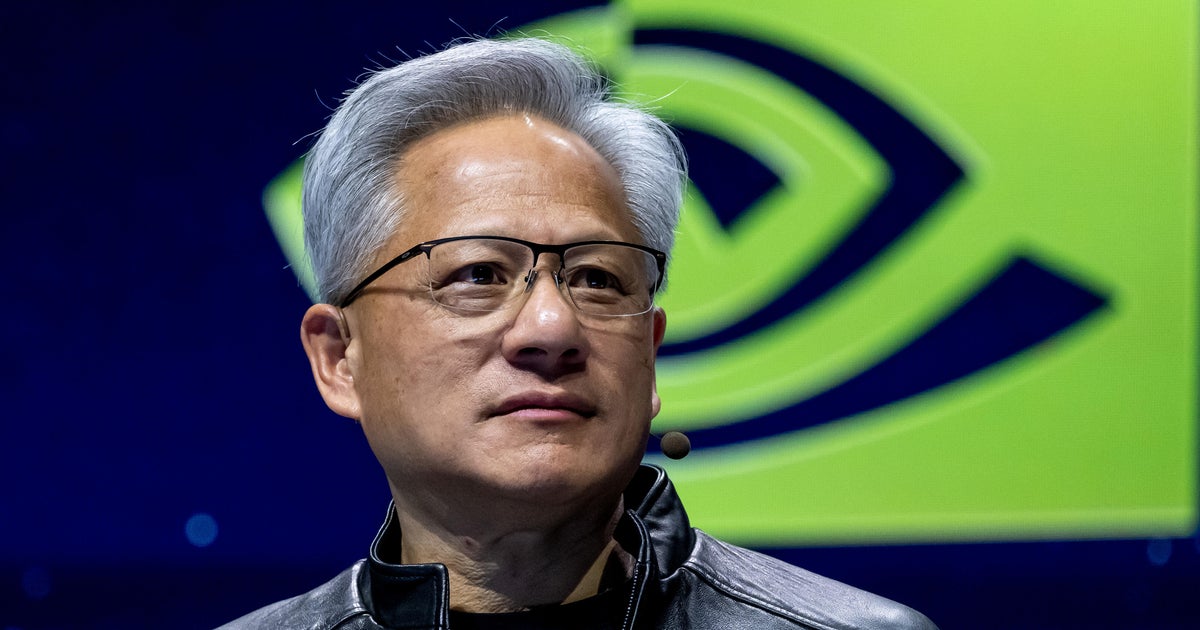
Nvidia's China Conundrum: A Political Minefield Threatening AI's Future

 Photo by Thomas Foster on Unsplash
The semiconductor industry, once a quiet titan of innovation, has fully embraced its role as a geopolitical battleground. No company embodies this more dramatically right now than Nvidia. As techcrunch.com reports, Democrats have launched their second Congressional investigation into Nvidia's China sales and its alleged dealings with former President Trump, following what the article refers to as a "spy affair." This isn't just about a company's bottom line; it's about the very infrastructure underpinning the global AI boom, and the political machinations threatening to splinter it.
The implications for anyone building or deploying AI models are stark. Nvidia isn't just a component supplier; it's the de facto foundation of modern AI. From the training of colossal models like OpenAI's gpt-6.1-terra-pro and Google's gemini-4-hydrogen, to the inferencing capabilities of Anthropic's claude-opus-5.5 and xAI's grok-4.7, Nvidia's GPUs are the oxygen. Any disruption, any increased friction in its global operations, will ripple through every corner of the AI ecosystem, from research labs to enterprise deployments.
The Inevitable Collision of Tech and Geopolitics
For years, the tech industry operated under a largely optimistic globalization thesis: silicon flowed freely, talent knew no borders, and innovation transcended nationalistic squabbles. That era is definitively over. The current investigation into Nvidia is less an isolated incident and more a symptom of a deeply entrenched geopolitical reality. The US and China are locked in a technological arms race, and semiconductors – particularly those powering AI – are the ultimate strategic choke point.
Nvidia's position is unenviable. On one hand, it's a global company with immense market share in China, a critical revenue stream. On the other, it's a US-based entity under intense scrutiny from its own government, pressured to align with national security objectives. The "alleged spy affair" and the "scheme with Trump" cited in the TechCrunch summary add layers of political intrigue, transforming what might have been a dry regulatory review into a headline-grabbing drama. This isn't just about compliance; it's about perception, political leverage, and the strategic control of a foundational technology. The stakes are immense, and the pressure on CEO Jensen Huang must be astronomical.
What This Means for AI Development and Deployment
If you're a developer, a startup founder, or a CTO relying on cutting-edge AI, this political drama has tangible consequences. First, expect continued supply chain volatility. Even if Nvidia itself isn't directly sanctioned or restricted, the ongoing investigations create uncertainty, which can translate into delayed shipments, higher costs, or even pressure to diversify hardware sourcing. While alternatives like AMD and Intel are making strides, Nvidia's dominance, especially in high-performance AI training, remains largely unchallenged in 2026. Any erosion of that dominance, or forced fragmentation of its market, will be felt globally.
Second, the political heat on Nvidia could accelerate the trend towards regionalized AI ecosystems. If US companies face increasing restrictions on selling advanced AI hardware to China, or vice-versa, we could see a divergence in AI development. Chinese firms might accelerate indigenous chip development, potentially leading to distinct hardware and software stacks that are incompatible or less performant with Western counterparts. This isn't just a hypothetical; it's already happening to some extent. The dream of a universally accessible, globally interoperable AI foundation could become a casualty of these geopolitical tensions.
Third, and perhaps most subtly, this saga will impact the open-source AI community. Many open-source projects rely heavily on Nvidia's CUDA ecosystem. If access to hardware or the underlying software tools becomes politicized or restricted, it could fragment the open-source movement, creating different "forks" optimized for different geopolitical regions or hardware platforms. This makes collaboration harder, potentially slowing down the pace of global AI innovation.
The Long Shadow of National Security
The core of this issue, beyond the immediate political wrangling, is national security. The ability to develop and deploy advanced AI is increasingly seen as a determinant of economic power, military superiority, and societal influence. The US government's concern, articulated in previous actions like export controls on advanced chips, is that its technological advantage could be eroded if its most sophisticated innovations are freely accessible to rivals.
The current investigation, framed by TechCrunch as involving a "scheme with Trump," suggests that the concerns are not just about China, but also about the potential for domestic political influence or impropriety impacting national security interests. This adds a layer of complexity that goes beyond mere trade policy and delves into the integrity of the political process itself. For Nvidia, navigating this treacherous terrain requires more than just technological prowess; it demands a sophisticated geopolitical strategy that balances global market access with national allegiance.
A Future of Fragmented AI?
The saga surrounding Nvidia isn't just a corporate headache; it's a bellwether for the future of AI. The days of frictionless global tech development are behind us. We are entering an era where national interests, political rivalries, and security concerns will increasingly shape the technological landscape. For AI professionals, this means a future that is likely more complex, potentially more fragmented, and certainly more politically charged. Staying informed about these geopolitical shifts is no longer optional; it's essential for anyone serious about building the next generation of intelligent systems. The question isn't if these investigations will impact the AI industry, but how deeply and for how long.
Frequently Asked
Why are Democrats investigating Nvidia's China sales?
The investigation, as reported by techcrunch.com, is the second of its kind and stems from concerns about Nvidia's dealings with former President Trump and its sales in China, particularly after news of an alleged "spy affair" broke. This aligns with broader US government efforts to control the export of advanced AI technology to China due to national security concerns.
How might this investigation affect the availability or cost of AI chips?
Any significant disruption to Nvidia's global operations, such as increased restrictions on sales or supply chain complications arising from the investigation, could lead to increased volatility in the supply and potentially higher costs for AI chips. This uncertainty could also incentivize diversification away from Nvidia hardware in the long term.
Is this a new trend, or has the tech industry faced similar political scrutiny before?
While political scrutiny of tech companies isn't new, the current intensity and focus on national security implications of AI chips represent an escalation. The ongoing US-China technological rivalry has transformed semiconductors into a critical geopolitical asset, making companies like Nvidia central to national policy debates in a way not seen in previous eras. ---META--- Democrats are investigating Nvidia's dealings with Trump and China sales. This political drama could reshape the AI chip landscape and global tech supply chains. ---TAGS--- Nvidia, AI chips, US-China relations, AI policy, semiconductor industry, tech regulation
What do the AIs actually think?
Ask GPT, Claude, Gemini and more about this topic simultaneously — and get a Consensus Score showing how much they agree.
Ask the AIs: “Nvidia's China Conundrum: A Political Minefield Threateni…” →