Nvidia's Chip Tracking Revelation: A Double-Edged Sword for AI's Future

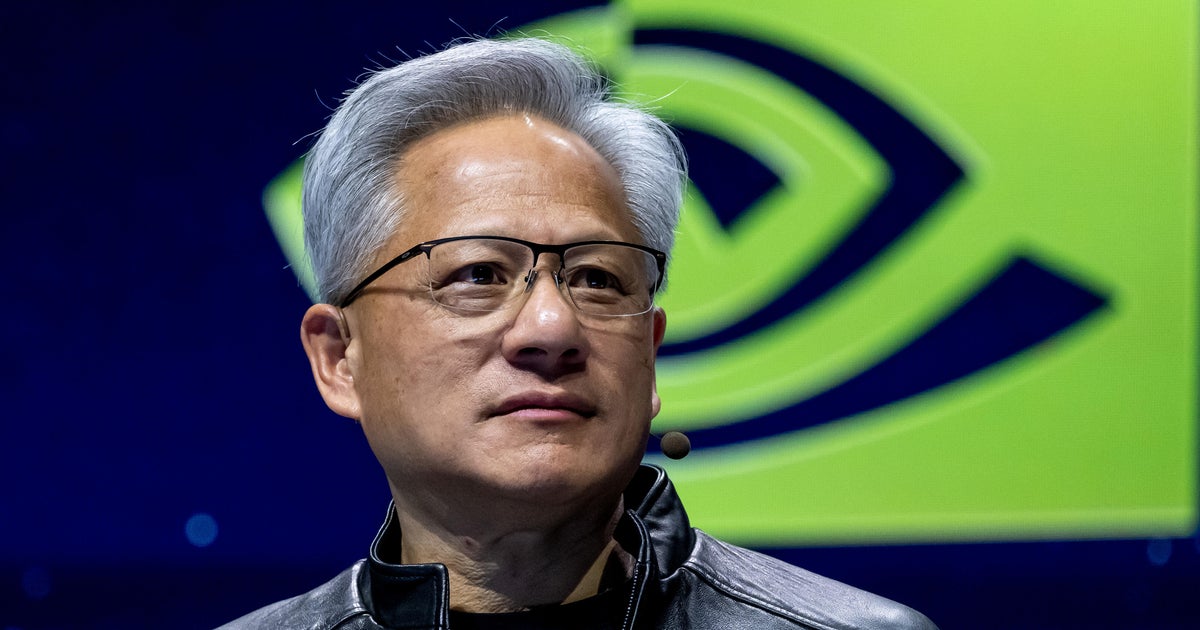
 Photo by Brecht Corbeel on Unsplash
The revelation that Nvidia privately confirmed its ability to track chips to fight smuggling, even as an industry group publicly deemed it "potentially infeasible," isn't just a technical footnote. As technologyreview.com reports, this admission to Illinois Representative Bill Foster fundamentally reshapes the conversation around AI hardware supply chains, national security, and the very future of model development.
For years, the discourse around AI chip export controls has been dominated by the seemingly insurmountable challenge of enforcement. How do you stop a tiny, powerful piece of silicon from ending up in the wrong hands? The prevailing wisdom, often echoed by industry lobbyists, was that such granular tracking was a logistical nightmare, if not outright impossible. This narrative served a convenient purpose, allowing for a degree of plausible deniability and, frankly, less friction in global sales. Nvidia's private admission shatters that illusion. It suggests that the "can't be done" was always more a matter of "don't want to do" – or, perhaps more accurately, "don't want to admit we can do."
The Geopolitical Chessboard: Who Controls the AI Brains?
The implications for geopolitics are nothing short of monumental. In an era where AI supremacy is increasingly intertwined with national security, the ability to trace advanced chips like those powering gemini-4-hydrogen, gpt-6.1-terra-pro, or claude-opus-5.5 isn't just about preventing rogue nations from building supercomputers. It's about asserting control over the very infrastructure of future power.
Consider the ongoing technological arms race. Nations are pouring billions into developing their own foundation models, fueled by the computational might of these high-end accelerators. If Nvidia, the undisputed king of AI hardware, possesses the capability to know precisely where its chips are at any given moment, the strategic leverage is immense. It transforms export controls from a blunt instrument into a precision-guided missile. Imagine a scenario where a nation is suspected of diverting chips to an unauthorized entity. With tracking capabilities, the US could potentially prove it, leading to targeted sanctions or even remote disabling if such a feature were ever implemented (a terrifying thought, but one that must be considered). This level of control could profoundly influence the balance of power, forcing nations to reconsider their allegiances and supply chain dependencies. It also begs the question: what other "impossible" capabilities does the industry secretly possess?
Developers and Businesses: Navigating the New Transparency
For AI developers and businesses, this news presents a complex new reality. On the one hand, a more secure supply chain could reduce the risk of critical hardware falling into the wrong hands, potentially safeguarding intellectual property and national security interests. This might, in theory, lead to more stable and predictable access to cutting-edge chips in authorized markets.
On the other hand, the specter of heightened surveillance introduces new anxieties. If chips can be tracked, what data is being collected? Is it just location, or could it extend to usage patterns, performance metrics, or even – in a dystopian future – remotely limiting functionality? While the Chip Security Act aims to prevent smuggling, the underlying technology could be repurposed or expanded. Developers pushing the boundaries with models like grok-4.7 or claude-sonnet-5.5, often requiring massive computational resources, might find themselves under a microscope. Businesses relying on these chips for their core AI infrastructure will need to consider the implications for data privacy, operational autonomy, and potential geopolitical entanglements. The "black box" nature of hardware procurement is slowly being dismantled, forcing a new level of transparency and accountability that many might not welcome. The ease with which an industry group dismissed the possibility of tracking, only for the leading manufacturer to privately confirm it, underscores a concerning disconnect between public statements and private capabilities. This credibility gap will undoubtedly fuel skepticism and demand for clearer regulations.
The DruxAI Advantage: Benchmarking a Transparent Future
This shift highlights precisely why platforms like DruxAI are becoming indispensable. As the foundational hardware becomes increasingly scrutinized and potentially politicized, understanding the nuanced performance of different models on available hardware becomes paramount. If access to the most powerful chips becomes constrained or geographically fragmented, developers will need to optimize their strategies.
Our ability to query and compare outputs from gemini-4-hydrogen, gpt-6.1-terra-pro, claude-opus-5.5, and grok-4.7 side-by-side isn't just about finding the "best" model; it's about adapting to a rapidly evolving ecosystem. If certain chips become harder to acquire in specific regions, knowing which models perform optimally on alternative, more accessible hardware will be a critical competitive advantage. This newfound transparency (or lack thereof, depending on your perspective) in the hardware supply chain necessitates a sharper, more adaptable approach to AI development. The era of simply assuming access to the latest and greatest is over; strategic planning around hardware availability and geopolitical constraints is now a core competency.
The revelation from Nvidia isn't just a technical detail; it's a seismic shift in the AI landscape. It signals an era where hardware isn't just a commodity but a strategic asset, where supply chains are battlegrounds, and where the promise of AI is inextricably linked to the politics of its underlying silicon. Developers, businesses, and policymakers alike must now grapple with a more transparent, yet potentially more controlled, future for artificial intelligence.
Frequently Asked
What is the "Chip Security Act" mentioned in the news?
The Chip Security Act is proposed legislation in the US that calls for anti-smuggling measures for advanced AI chips. Its aim is to prevent these critical components from being diverted to unauthorized entities or nations.
Why is Nvidia's ability to track chips significant?
Nvidia's confirmation that it can track chips is significant because it contradicts public statements from an industry group claiming such measures were "potentially infeasible." This capability gives governments a powerful tool to enforce export controls, potentially reshaping global power dynamics and AI development.
How might this affect AI model developers and businesses?
Developers and businesses might face increased scrutiny over their hardware usage, potentially impacting data privacy and operational autonomy. While it could lead to a more secure supply chain, it also introduces geopolitical risks and necessitates a more strategic approach to hardware procurement and model optimization. ---
What do the AIs actually think?
Ask GPT, Claude, Gemini and more about this topic simultaneously — and get a Consensus Score showing how much they agree.
Ask the AIs: “Nvidia's Chip Tracking Revelation: A Double-Edged Sword f…” →